Four Tips To Support Monthly Subscription Box Sales
The idea of the monthly subscription box has quickly become a phenomenon. The subscription box industry has shown itself to…

The global 3PL market will reach USD 1.3 trillion by 2024. Here is an honest, detailed look at what a genuinely capable 3PL provider actually does and what to look for when choosing one.
The global third-party logistics market is estimated to reach USD 1.3 trillion, and 91% of businesses using 3PL services report that those relationships are successful. Those are compelling statistics, but they obscure a significant variation in what 3PL actually means in practice. At one end of the spectrum, a 3PL provider is a warehouse that stores your stock and picks orders. At the other, it is a fully integrated operational partner that manages every element of your supply chain from goods-in to returns, with real-time data visibility, technology-enforced accuracy, and a commercial relationship built around your growth rather than your compliance with a rate card.
Understanding what a genuinely capable 3PL provider actually does, in detail, is the foundation for making a good decision when evaluating partners. Most businesses that are unhappy with their current 3PL relationship are not unhappy because they chose the wrong industry. They are unhappy because they did not understand clearly enough what good looked like before they signed a contract.
Key Takeaways
Goods-In: Why the Process That Happens Before Any Order Determines Everything That Follows
The 3PL relationship begins before any order is fulfilled. When stock arrives at the warehouse, whether in cartons on a pallet, in a full container, or in a mixed delivery of multiple product lines, it needs to be received, checked, and put away accurately and efficiently.
At Bray Solutions, all inbound deliveries are booked by our Transport and Logistics team to ensure the receiving process is properly resourced and scheduled. Our target is for all inbound goods to be put away and available on the WMS within 48 hours of arrival. Every receipt is recorded against the correct SKU, quantity, and batch code at the point of put-away.
Stock Management: The Difference Between Knowing What You Hold and Knowing It Accurately
Bray Solutions’ WMS integrates directly with Shopify, Amazon, WooCommerce, and other major ecommerce platforms, so the stock data in our system is reflected in real time across the client’s sales channels. When a product is picked and despatched, the available stock on the client’s website adjusts automatically. Overselling is prevented not by manual oversight but by the integration that keeps the system and the channels aligned.
Order Processing: The Integration That Removes the Manual Step Between Sale and Fulfilment
Orders are processed at Bray Solutions daily, with two routes available to clients. The preferred route is direct integration: orders placed on the client’s ecommerce platform flow automatically into our WMS in real time, with no manual step required. The alternative route is manual order submission via email or spreadsheet for clients with more complex or bespoke order profiles.
The Pick and Pack Process: Where Accuracy Is Either Built In or Left to Chance
At Bray Solutions, the two controls that matter most for accuracy are the dual barcode scanning at the pick stage, where both the storage location and the product must be confirmed against the order data before the system allows the pick to proceed, and the independent verification at the packing station, where the complete order is confirmed against the system before it is sealed. The output of this process is a 99.98% pick accuracy rate across our entire ecommerce fulfilment operation.
Despatch, Returns, and the Full Cycle of the 3PL Relationship
Despatch from Bray Solutions operates daily through Royal Mail, DHL, DPD, and UK Mail. Orders placed within the agreed cut-off time are despatched the same day.
The returns and reverse logistics function closes the loop on the order journey. Returned items are received, inspected against agreed quality criteria, and either reintegrated into available inventory or flagged as requiring rework, disposal, or client decision. The stock record updates automatically at each stage. The client sees the status of every return in real time through their portal.
What to Actually Evaluate When Choosing a 3PL Provider
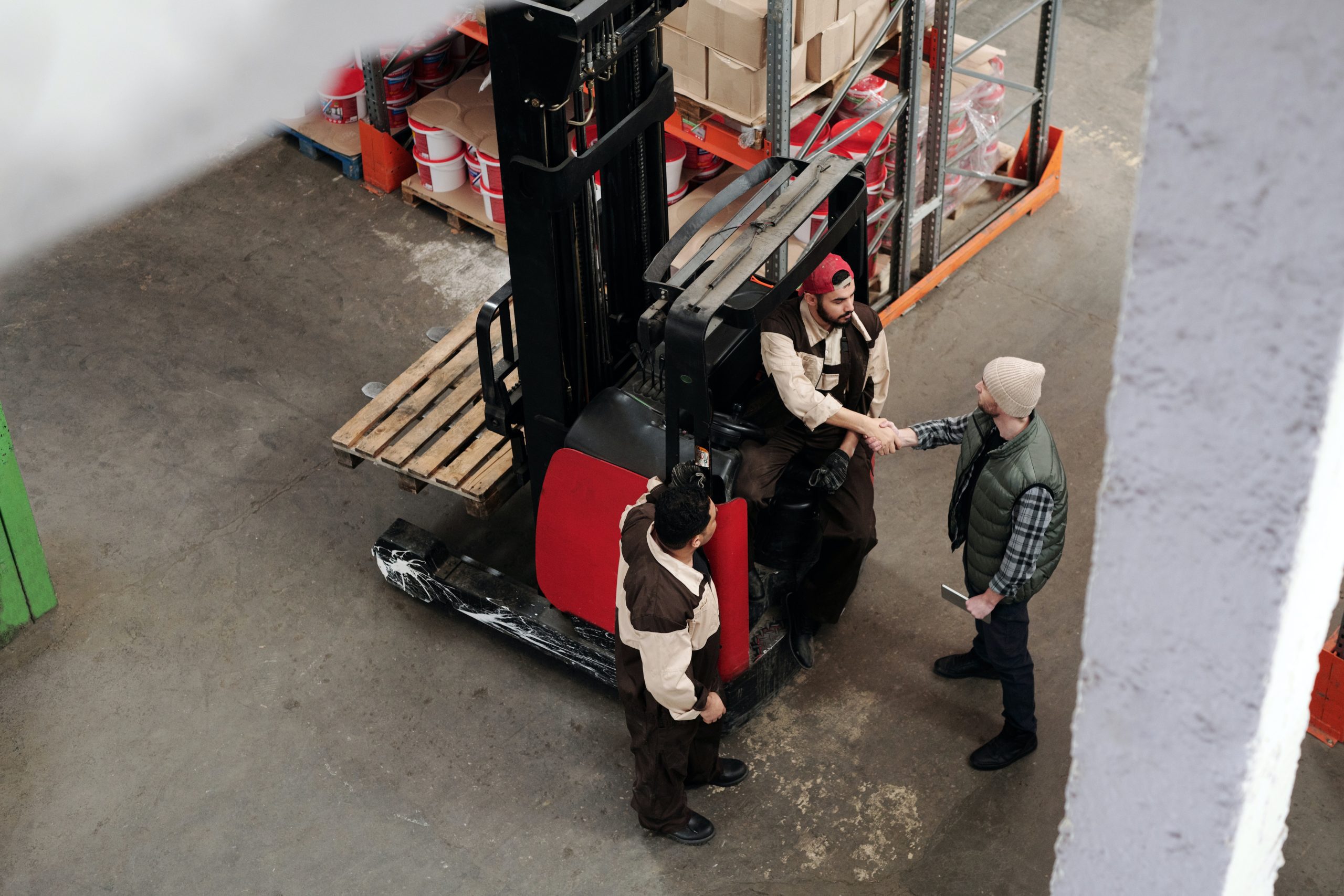
When visiting a potential 3PL provider, the things that matter most are in the operation itself. Is the warehouse clean, organised, and clearly laid out? Is stock clearly located and accessible? Are the team engaged and purposeful? Is technology actively in use, with scanners on the warehouse floor and WMS terminals visible at workstations?
Ask to see the picking process demonstrated live, not described. Ask how exceptions are handled when a pick instruction conflicts with what is physically available. Ask what the GDPR policy is for customer data held in the system and who has access to it. And visit before you sign.
A well-run 3PL relationship is one of the most commercially significant operational partnerships a growing business can have. It is the infrastructure behind every delivery promise you make to your customers and every stock management decision you make as a business. Bray Solutions approaches every client relationship with the operational rigour, technological capability, and commercial transparency that the partnership deserves. If you are evaluating your options, we would welcome the opportunity to show you our operation in person.
Get a free quote from Bray Solutions
Frequently Asked Questions
Q: What services should a 3PL provider offer as standard?
A: A capable 3PL should offer goods-in receiving and processing, stock management with real-time WMS data, order processing with ecommerce platform integration, pick and pack with technology-enforced accuracy controls, despatch through an established carrier network, returns processing with inspection and reintegration, and client reporting through a live data portal.
Q: How does a 3PL’s goods-in process affect pick accuracy downstream?
A: Directly and significantly. Stock received with incorrect quantities, put away in wrong locations, or recorded with inaccurate batch codes creates picking errors and stock discrepancies that originate at goods-in but surface as fulfilment problems. A rigorous goods-in process is the prerequisite for accuracy throughout the operation.
Q: What should I look for when visiting a potential 3PL warehouse?
A: A clean, well-organised facility with clearly located stock. Technology actively in use including scanners on the warehouse floor and WMS terminals at workstations. An engaged and purposeful warehouse team. Visible security infrastructure. Ask to see the picking process demonstrated live, ask how exceptions are handled, and ask about GDPR compliance for customer data.
Q: How do I assess whether a 3PL can scale with my business?
A: Ask directly about current capacity utilisation and available headroom. Ask how they have accommodated volume growth for existing clients with specific examples. Ask what happens to accuracy and despatch performance during peak trading periods. A provider that answers clearly with evidence is significantly more likely to scale with you than one offering general assurances.
Q: What is the difference between a 3PL and a fulfilment house?
A: A third-party logistics provider typically encompasses a wider range of services beyond ecommerce order fulfilment, including transport management, distribution centre compliance, contract packing, returns management, and international freight handling. A fulfilment house typically focuses specifically on the pick, pack, and despatch of ecommerce orders.




We integrate with a number of different systems.
Get in touch to find out how we can help.