5 Top Tips for Modern Warehouse Tech Efficiency
5 Top Tips for Modern Warehouse Tech Efficiency is the latest article on the warehousing industry news from leading 3PL [...]


For many growing ecommerce businesses, fulfilment starts as an in-house operation built out of necessity rather than design.
A spare space or unit becomes a warehouse. A spreadsheet becomes an inventory system. “Best efforts” slowly turn into a fulfilment process.
At first, it works. But as order volumes grow, the cracks start to appear – missed dispatches, stock discrepancies, inconsistent packing, slow returns, and rising operational cost that’s hard to explain (and even harder to control).
That pressure isn’t just anecdotal. UK ecommerce businesses are operating in an environment where delivery expectations are high, and mistakes are expensive. One UK home delivery study found 84% of consumers rate “security” as the most important aspect of delivery – reinforcing that fulfilment isn’t just operational; it’s trust and brand experience. And on the retail side, a 2024 report found nearly 40% of UK retailers fail to meet delivery times – showing how widespread performance gaps are.
That’s where outsourced 3PL services come in.
However, despite how commonly the term is used, very few businesses are ever shown what actually happens inside a professional 3PL operation – step by step – from onboarding to returns and performance reporting.
This guide breaks down the full 3PL process in detail, using best-practice ecommerce fulfilment methods and Bray Solutions’ service model as the reference point. It’s designed to provide the kind of transparency most businesses never get from their current provider – and the peace of mind procurement and operations teams need to make a confident decision.
If you’re evaluating fulfilment partners, explore Bray’s 3PL Services to see what structured ecommerce fulfilment looks like in practice.
3PL services (third-party logistics services) involve outsourcing fulfilment operations – including warehousing, inventory management, pick and pack, shipping, and returns – to a specialist provider.
For ecommerce brands, the purpose of a 3PL is simple:
To deliver orders accurately, consistently, and at scale – without the operational burden of running a warehouse in-house.
However, not all 3PLs operate in the same way. The difference between a storage-only provider and a true ecommerce 3PL is process depth, system controls, and operational transparency.
The typical 3PL services process follows these steps:
Each step plays a core role in ensuring orders are fulfilled accurately, on time, and in line with brand standards, and each step is a common failure point for businesses that have built fulfilment “as they go”.
Onboarding → Goods In → Putaway → Stock Control → Order Sync → Pick → Pack → Dispatch → Returns → Reporting
If your current operation feels chaotic, it’s usually because one or more of these stages is missing structure, verification, or defined rules.
Onboarding is the process of configuring systems, workflows, and rules so a 3PL can fulfil orders accurately before any stock is shipped.
Before a single product is dispatched, a professional 3PL operation starts with onboarding – because this is the phase that determines whether fulfilment runs smoothly or becomes a constant source of friction.
Bray runs a structured onboarding process supported by an Account Management and Project team, ensuring all required system and stock setup information is captured to “hit the ground running”.
When migrating from an existing 3PL provider, Bray requests clearly marked inbound pallets and cartons where possible to reduce processing time into racking and speed up go-live.
Typical onboarding timeline: 2–3 weeks, depending on SKU/unit count and integration complexity. Bray confirms go-live once systems and stock are in place.
Onboarding: typically 2–3 weeks (complexity-dependent)
Migration support: clearly marked inbound cartons/pallets reduce goods-in time
If a provider can’t clearly explain onboarding stages and inputs, that’s a risk signal – because poor onboarding is the root cause of most fulfilment failures.
If you want onboarding to run fast and cleanly, have these ready:
This is where many businesses feel “relief” moving to a 3PL, because expectations become defined and documented rather than living in someone’s head (or in various spreadsheets!).
Inbound receiving is where inventory accuracy begins, and where DIY operations often fail as they scale.
Receiving isn’t just unloading stock. It’s a control process: verifying what arrived, ensuring it matches what was expected, and recording it correctly.
Before stock arrives, our team requires an ASN (Advance Shipping Notice). This allows the goods-in team to reference expected SKUs and quantities as soon as the delivery arrives.
Ideally, each carton or pallet has a packing list (although we recognise this isn’t always possible).
If there are damages or incorrectly labelled cartons/pallets on arrival, Bray immediately informs the customer and provides images.
If received quantities vary from the ASN, Bray records the actual received quantity into the system and notifies the customer via an ASN report showing the differences.
Quarantine (when needed): Stock may be quarantined at customer request for reasons including damage, inspection requirements, best-before checks, or serial number verification.
To summarise:
ASN required pre-arrival
Photo evidence for damage/mislabels
ASN discrepancy report sent to client
Quarantine supported for inspection/date/serial rules
If a provider can’t describe how they handle discrepancies, you’re not outsourcing risk – you’re inheriting it.
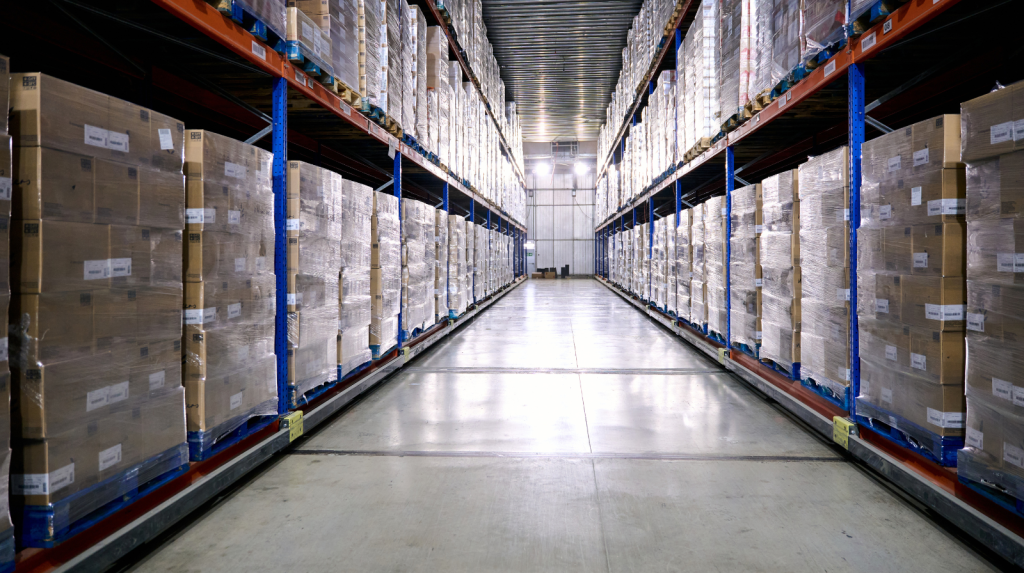
Once received, inventory isn’t simply “put on a shelf.”
A professional 3PL uses defined putaway and slotting rules to optimise speed, accuracy, and security.
Why this matters to ops teams: storage discipline is what makes picking scalable under pressure. Poor slotting and random putaway is where mispicks start.
Inventory control ensures stock levels remain accurate over time using warehouse systems, cycle counts, and reconciliation processes.
Inventory accuracy isn’t maintained by annual stocktakes. It’s maintained through everyday controls.
Bray operates ongoing cycle counts (schedule agreed at onboarding) to maintain high stock accuracy rather than relying solely on annual stock takes.
Discrepancies are investigated and worked through, with explanations and corrective actions communicated to the customer.
Customers have full visibility of stock flow, with auditable stock actions at unit level.
To summarise:
Ongoing cycle counts (agreed schedule)
Corrective actions communicated
Auditable unit-level stock actions
In-house myth: “Our spreadsheet is accurate enough.”
At scale, manual systems fail silently – until oversells, stockouts, and refunds hit margin.
Once live, orders flow automatically from your sales channels into the 3PL system.
If a provider promises “same-day dispatch” without cut-offs and conditions, that’s not a promise – it’s a future dispute.
Picking is the highest-risk stage of fulfilment. A professional 3PL reduces errors through process design, not guesswork.
DIY risk: manual picking without verification is one of the leading causes of wrong-item shipments – especially during peak seasons.
Packing isn’t just about protecting the product – it’s also about protecting the brand.
Packing instructions are defined by the customer at onboarding stage and can be evolved once up and running. These standards are followed consistently by Bray’s dedicated pick and pack teams.
Why this matters to owners and procurement: packaging mistakes don’t just create returns, they damage perceived brand quality and increase customer service load. If there is one core area where inefficiency piles up – it’s here, and it CAN be avoided.
As ecommerce brands grow, fulfilment often expands beyond single-SKU orders.
Typical value-added services include:
Operational truth: if these workflows aren’t planned, they become disruptive “special projects” that increase cost and error rates. A mature 3PL builds them into structured workflows.
If bundles and seasonal kits are part of your roadmap, make sure your 3PL can support them consistently in advance – not “when they have capacity.” If you still aren’t convinced – ask to speak to current customers about their experience.

It’s not secret that shipping is where fulfilment becomes customer-facing – and where reliability affects customer trust and repeat buying. In today’s world of social media making brands vulnerable – this is one area to make sure runs without a hitch (or as little as possible).
This matters because delivery performance is a known weak point across the market: a 2024 report found nearly 40% of UK retailers fail to meet delivery times.
Why this matters: carrier management, cut-off adherence, and labelling accuracy directly affect delivery performance and customer satisfaction.
Unfortunately, returns are unavoidable in ecommerce, but poorly handled returns are optional.
And in the UK, returns are not a small problem: Retail Economics forecasts online UK returns tipping ~£27.3bn in 2024 – a huge operational and margin burden for retailers.
Returned items are inspected on receipt and graded based on agreed criteria before being:
Bray can rebox and relabel items for resale. Customers receive notification when returns are processed via Bray’s WMS, and stock levels update automatically based on outcome.
Returns speed: resellable returns are typically back on shelf within 48 hours of being received back into the warehouse.
To summarise:
Returns inspected + graded
Rebox/relabelling supported
WMS notifications + auto stock updates
Resellable returns back on shelf: typically 48 hours
If your current returns take a week+ to process, you’re not just slow – you’re tying up cash and losing resale value.
A good 3PL relationship doesn’t end at dispatch.
This is where procurement teams often feel the biggest “risk”: Will we lose visibility once it’s outsourced?
With the right partner, visibility increases – because governance becomes structured.
Bray’s Account Management team maintains day-to-day contact, supported by regular formal monthly meetings to review:
If a provider can’t explain how they measure performance, they can’t improve it – and you can’t manage them, which is going to cause friction and bottlenecks further down the line.
Businesses new to 3PL services often misunderstand:
These assumptions are where fulfilment issues begin – especially during busy seasons when cracks begin to show.
Myth: Outsourcing fulfilment means losing control
Reality: A good 3PL increases control through systems, reporting, and auditable actions
Myth: 3PLs are only for large brands
Reality: They’re most valuable at growth inflection points, when in-house starts to break
Myth: All 3PL pricing is comparable
Reality: Hidden costs often sit in receiving, returns, and “special projects”
| In-house fulfilment | 3PL services |
| Manual processes | Defined, repeatable workflows |
| Spreadsheet-based stock | WMS-led inventory control |
| Fixed warehouse costs | Scalable, variable costs |
| Limited shipping leverage | Carrier options + structured dispatch |
| Returns handled ad hoc | Managed reverse logistics |
1) “What’s your guaranteed B2C cut-off time?”
Good answer: a specific cut-off, with clear conditions and exceptions.
2) “Do you require an ASN before stock arrives?”
Good answer: yes, and they explain why it improves speed/accuracy.
3) “How do you handle discrepancies and damaged stock?”
Good answer: recorded immediately, communicated with evidence, stock held/quarantined if required.
4) “How do you maintain inventory accuracy week to week?”
Good answer: ongoing cycle counts + exception recounts + auditable adjustments.
5) “How fast do resellable returns get back into stock?”
Good answer: a clear turnaround target (and how it’s achieved).
6) “How do you enforce brand packing rules?”
Good answer: rules documented at onboarding, trained teams, quality checks, controlled changes.
7) “How often will we review performance?”
Good answer: regular cadence (monthly), plus day-to-day support.
If you want a 3PL partner who can answer these clearly – and back it up operationally – speak to us about our 3PL services.
If any of these sound familiar, you’re likely at the 3PL tipping point:
Bray’s 3PL services are designed around the areas that matter most to scaling ecommerce operations:
What does a 3PL do?
A 3PL manages warehousing, inventory control, pick and pack fulfilment, shipping, and returns on behalf of a business. Ecommerce brands use 3PL services to scale fulfilment reliably without running warehouses in-house.
How does the 3PL process work?
The process typically starts with onboarding and setup, followed by inbound receiving, storage and stock control, order fulfilment, shipping, and returns processing. Ongoing reporting and optimisation ensure accuracy and performance over time.
What services are included in 3PL services?
3PL services typically include warehousing and storage, inventory management, pick and pack, shipping, and returns. Many also offer contract packing, kitting, and branded packaging support.
What’s a realistic same-day dispatch cut-off time?
Cut-off times vary by provider, carrier, and order type. A good 3PL will give a specific cut-off time, explain conditions, and confirm different rules for B2B or palletised orders.
Do 3PLs require an ASN before stock arrives?
Many structured 3PLs do. An ASN helps goods-in teams verify expected SKUs and quantities quickly, reducing discrepancies and speeding up stock availability.
How long does it take to onboard with a 3PL?
Onboarding typically takes a few weeks depending on SKU count and integration complexity. Proper onboarding is essential to prevent fulfilment errors after go-live.
Do 3PL services include returns?
Yes. A professional 3PL includes returns and reverse logistics, with inspection, grading, restocking rules, and system updates to keep inventory accurate.
Will I lose control if I outsource to a 3PL?
No! The right 3PL increases control through real-time visibility, reporting, and auditable inventory actions. Many businesses gain more oversight than they had in-house.
Why do businesses switch 3PL providers?
Common reasons include poor inventory accuracy, slow dispatch, unclear cut-offs, hidden fees, weak returns handling, and a lack of transparent performance reporting.




We integrate with a number of different systems.
Get in touch to find out how we can help.