
The Importance of Returns Management
WHAT IS RETURNS MANAGEMENT? Returns management is an important process in day-to-day fulfilment operations. It involves correctly and efficiently processing [...]

Deciding between in-house fulfilment and a 3PL is rarely about which model is better in the abstract. It is about whether your business, at its current order volume and stage of growth, is better served by keeping fulfilment under your own roof or handing it to a specialist partner. Both approaches work, and both have genuine trade-offs, so the honest answer is that the right choice depends on where you are right now rather than which option sounds more impressive.
This guide walks through what each model involves, what they really cost once the hidden costs are counted, the concrete signs that a business has outgrown doing it themselves, and the cases where staying in-house still makes sense. It closes with a straightforward comparison and a short checklist for anyone ready to make the move.
What Is In-House Fulfilment?
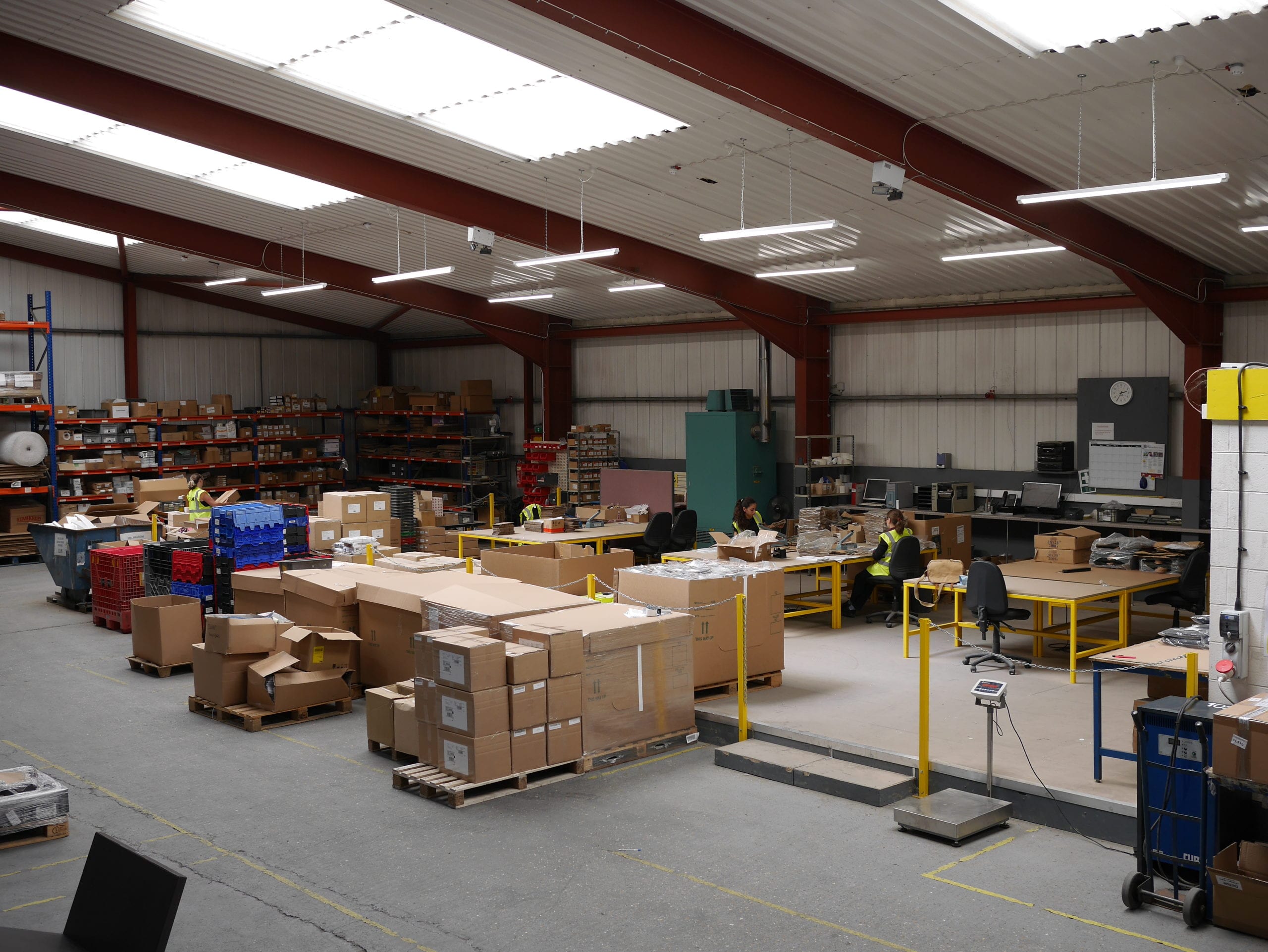
In-house fulfilment means a business manages every part of order fulfilment itself, using its own space, staff and systems. That covers receiving and storing stock, picking and packing orders as they come in, arranging shipping with a courier, and handling any returns that come back.
Most ecommerce brands start this way, because at low order volumes it is the simplest option and gives the founder complete control over how every order looks and feels. The trade-off is that every part of that process, from the shelving to the staff rota, has to be built and managed internally, and none of it is optional once order volumes start climbing.
What Is a 3PL (Third-Party Logistics)?
A 3PL, short for third-party logistics, is a specialist partner that manages fulfilment on a business’s behalf. Stock is sent to the 3PL’s warehouse, and the 3PL’s own staff and systems handle storage, picking, packing, shipping and returns, using infrastructure the business never has to build itself.
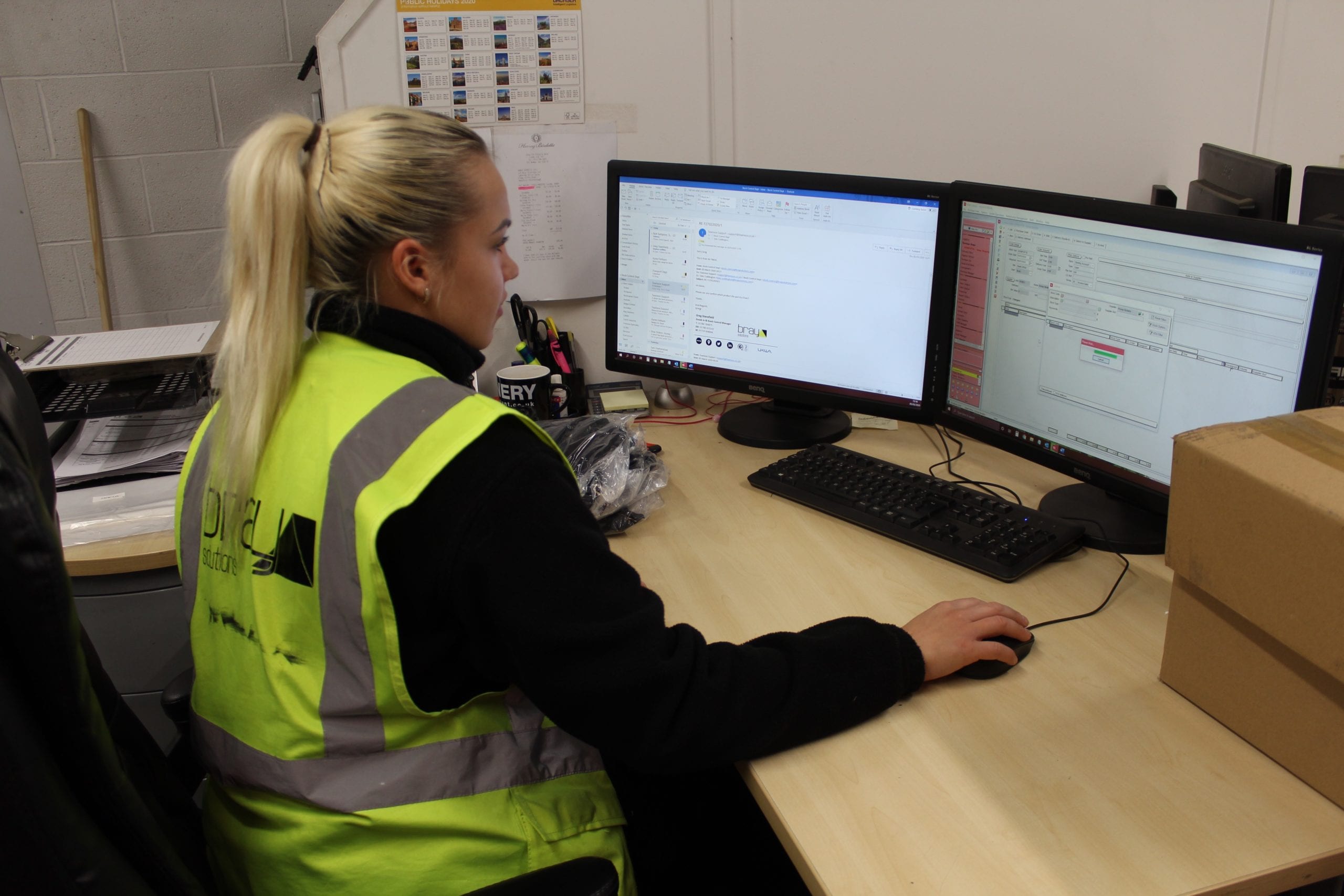
The business still owns the customer relationship and the brand experience. What changes is who is physically holding the stock and running the warehouse floor. Most 3PLs, including Bray Solutions, integrate directly with platforms like Shopify and Amazon so that orders flow through automatically rather than needing manual handling on either side.
The Real Cost Comparison: In-House vs 3PL
The fixed and hidden costs of in-house fulfilment
In-house fulfilment looks cheaper on paper at very low volumes, largely because most of its real costs are easy to overlook until they show up on a bank statement. Beyond obvious costs like packaging materials, a business running its own fulfilment is also carrying warehouse or storage space, racking and equipment, staff wages and training, software for stock and order management, insurance, and the ongoing admin time of managing all of it, which rarely gets costed properly.
Staffing costs in particular have been moving in one direction. The UK’s National Living Wage rose to £12.21 an hour from 1 April 2025, a 6.7% increase, as confirmed by the UK Government’s official announcement. For a business relying on hourly warehouse staff to pick and pack every order by hand, that kind of rise lands directly on the cost of every single order shipped.
How 3PL costs are structured
A 3PL typically charges on a pay-as-you-go basis across storage, picking and packing, and shipping, so cost scales with activity rather than sitting there as a fixed overhead regardless of how many orders actually go out. That structure removes the need for the upfront capital a business would otherwise sink into warehouse space, equipment and a permanent headcount before it even knows how much it will grow.
A Forrester Consulting study commissioned by Amazon found that 43% of ecommerce executives managing fulfilment in-house had not been able to reduce their logistics costs, and that 77% of businesses who outsourced to a 3PL reported a transformational improvement in reducing their operating costs. The same research found that 42% of businesses handling fulfilment in-house could not reliably handle spikes in demand, which is exactly the kind of cost pressure that tends to build quietly until a peak season exposes it all at once.
| Cost area | In-House Fulfilment | 3PL |
| Warehouse or storage space | Fixed cost, paid whether busy or quiet | Pay-as-you-go, scales with stock held |
| Staffing | Direct wages, National Living Wage exposure, recruitment and cover | Built into the 3PL’s per-order or per-pallet fee |
| Equipment and software | Upfront capital spend on racking, scanners, WMS | Included as part of the 3PL’s infrastructure |
| Peak season capacity | Requires temp staff, overtime or turning away demand | Flexes with the 3PL’s wider client base |
| Shipping rates | Retail or small-business courier rates | Often negotiated, consolidated volume rates |
A handful of concrete, checkable signals tend to show up before a business consciously decides it is time to outsource. Any one of these on its own might just be a bad week. Several of them together, most weeks, is a business that has outgrown doing it in-house.
When In-House Fulfilment Still Makes Sense
Outsourcing is not automatically the right call for every business, and a genuinely useful comparison has to say so. In-house fulfilment still tends to make sense in a few specific situations.
For businesses in one of these categories, the smarter move is usually to keep fulfilment in-house for now and revisit the decision once volume, space or staffing pressure genuinely changes, rather than outsourcing before it is actually needed.
In-House vs 3PL: Side-by-Side Comparison
| Factor | In-House Fulfilment | 3PL |
| Cost structure | Fixed overhead regardless of order volume | Usage-based, scales with activity |
| Scalability | Limited by available space and staff | Flexes with the 3PL’s wider infrastructure |
| Control | Full, direct oversight of every order | Managed through SLAs and reporting |
| Technology | Requires its own investment in WMS and tracking | Provided as part of the service |
| Peak season | Relies on overtime, temp staff or turning down orders | Absorbed across the 3PL’s client base |
| Time investment | High, pulls focus away from growth | Low, frees up time for sales and product |
Bray Solutions works with ecommerce and contract packing clients from its base in Peterborough, supporting brands across East Anglia and the wider UK as they move past the point where in-house fulfilment can keep up. The brands that get the most from working with a 3PL tend to be exactly the ones described above: consistent, growing order volumes, a clear product range, and a genuine need to free up time for sales, product and marketing rather than warehouse admin.
For a closer look at what Bray’s own 3PL service includes, see the 3PL services page, or get in touch for a quote based on your own order volume and product range.
In-house fulfilment means a business handles its own storage, picking, packing, shipping and returns using its own space and staff. A 3PL is a specialist partner that takes on all of that on the business’s behalf, using its own warehouse, technology and courier relationships.
There is no single number that applies to every business, since it depends on space, staff and product type as much as order count. As a general pattern, brands tend to start feeling the strain once order volume becomes consistent and daily rather than occasional.
It depends on volume. At very low order volumes, in-house fulfilment can be cheaper simply because there is less to outsource. As volume grows, the fixed costs of running fulfilment in-house (space, staff, equipment) tend to overtake the pay-as-you-go cost of a 3PL, which is why most businesses that switch do so as they scale rather than from day one.
Yes. Some businesses do move fulfilment back in-house, usually once they have reached a scale where building their own dedicated operation becomes more cost-effective than outsourcing. It is a less common move than switching to a 3PL, but it is not a one-way door.



We integrate with a number of different systems.
Get in touch to find out how we can help.