
Four Ways Mobile Devices Are Changing eCommerce Businesses
Mobile devices are changing the face of eCommerce and in turn, the 3PL world. Read on to find out what [...]

Email drives more supply chain value than most ecommerce businesses realise. From order updates to abandoned cart recovery and security, here is how to use it properly.
Email has been declared dead as a marketing channel roughly once a year for the past decade. It has outlived every prediction. For ecommerce businesses managing a supply chain, email remains the single most versatile communication tool in the operation, and most businesses are using only a fraction of its capability.
Done well, email connects every part of your supply chain: your warehouse operation, your suppliers, your customers, and your ecommerce fulfilment partner. Done poorly, it creates confusion, delays, and significant security exposure. According to Verizon, phishing accounts for 22% of all data breaches, making email the most common attack vector used to compromise a business.
This article covers where email adds the most value in a supply chain context, how to use it strategically to improve customer retention and operational efficiency, and why email security deserves far more attention than most ecommerce businesses give it.
Key Takeaways
The Emails Your Customers Are Actually Waiting For
The emails that generate the highest open rates in any ecommerce operation are not the promotional campaigns that take hours to design. They are the transactional emails that customers are actively looking for the moment they place an order. Order confirmations, despatch notifications, delivery updates, and return confirmations all arrive at precisely the moment a customer wants reassurance.
Most businesses treat transactional emails as a technical necessity rather than a brand opportunity. A despatch notification that simply states your order has shipped is factually correct but commercially inert. The same notification that confirms the item, includes the tracking link, and reinforces the brand values does all of the same work and several additional things that contribute to retention.
Bray Solutions integrates directly with Shopify, WooCommerce, Amazon, and other major ecommerce platforms, so that order status updates flow automatically based on real-time activity in our warehousing and storage operation. When an order is despatched, the trigger fires immediately. The accuracy and timing of these communications is a function of the integration and the warehouse operation, not a manual task that someone needs to remember to perform.
The 45% Statistic That Most Ecommerce Businesses Are Leaving on the Table
Abandoned cart recovery is one of the most cited opportunities in ecommerce, and also one of the most underutilised. The data is straightforward: 45% of abandoned cart emails are opened. Of those opens, 21% generate a click-through where the shopper returns to review their basket. And 50% of those who click through ultimately complete a purchase.
The data consistently shows that an email sent approximately one hour after abandonment, followed by a second at 24 hours if there has been no conversion, outperforms both extremes. Bray Solutions’ 3PL services include the platform integrations that ensure inventory data feeding these automations is accurate and current, so the email never promises a product that is actually out of stock.
Keeping Customers After the Purchase Is Made: The Post-Purchase Email Window
The period immediately following a successful purchase is one of the most commercially valuable windows in the customer relationship, and most businesses do not have a deliberate strategy for it.
Post-purchase review emails, sent when the customer has realistically received and used the product, generate reviews that are more detailed, more positive, and more credible to future buyers. Replenishment reminders are another high-value post-purchase email that most businesses underuse. For consumable products with a predictable usage cycle, an email timed to arrive when the customer is likely running low achieves purchase rates significantly above standard promotional emails.
The Email Security Gap That Is Leaving Your Business Exposed
Email security is the area of supply chain email management where the gap between risk and investment is most acute. Bray Solutions’ Head of IT frames it plainly: email remains the most common attack vector used to compromise a business. Supply chain businesses are particularly attractive targets because they combine routine high-value financial transactions with a high volume of regular supplier correspondence.
An attacker who can successfully impersonate a supplier notifying the business of a new bank account operates in an environment where such requests are plausible and the pressure to respond quickly is real. These attacks are not crude. They are researched, contextually accurate, and increasingly convincing.
Two Controls That Stop Most Supply Chain Email Attacks
SPF, DKIM, and DMARC are three mechanisms that together allow receiving mail servers to verify that an email genuinely originated from the domain it claims to represent. Implementing all three for your domain is a technical task that most IT providers can complete in hours, and it costs nothing beyond that time. Yet a significant proportion of businesses in the ecommerce and supply chain space have not done it.
Beyond the technical protocols, the single most effective operational control is a clear internal policy requiring that any payment instruction change received by email is verified by telephone to a known contact number before any action is taken. The number used must be one already held by the business, not one provided in the email making the request. This single process would prevent the majority of successful payment fraud attacks.
Treating Email as a System Rather Than a Channel
The businesses that get the most from email in their supply chain operations are those that treat it as a structured system with distinct categories, each with its own purpose, audience, and performance metrics.
Transactional emails have one job: to keep the customer accurately informed at every stage of the order journey. Operational emails between the business and its 3PL partner and suppliers should be structured, documented, and subject to clear response time expectations. Post-purchase retention emails should be timed, relevant, and measurably tied to repeat purchase rates. And security protocols should be applied across all email activity, not treated as an add-on for sensitive communications only.
The businesses that grow consistently and retain their customers most effectively are those that manage their supply chain communications with the same rigour they apply to their products and marketing. Email sits at the centre of that: connecting warehousing activity to customer communications, supplier relationships to payment processes, and post-purchase engagement to repeat revenue. Bray Solutions’ direct integrations with major ecommerce platforms mean that the warehouse activity driving your customer communications is accurate, real-time, and requires no manual intervention from your team.
Get a free quote from Bray Solutions
Frequently Asked Questions
Q: Why do transactional emails outperform promotional emails in ecommerce?
A: Transactional emails arrive at precisely the moment a customer is actively looking for them. The motivation to open them is immediate and personal, which is why they consistently achieve open rates multiple times higher than promotional messages. They are also the most direct expression of your operational reliability as a brand, which makes their quality and accuracy commercially significant beyond their open rate.
Q: What is the best timing for an abandoned cart email?
A: Data consistently shows that an email sent approximately one hour after cart abandonment achieves the highest recovery rate, catching the customer while the intent is still warm. A follow-up sent 24 hours later, if the first has not converted, captures a second window. 45% of abandoned cart emails are opened, and 50% of click-throughs ultimately complete a purchase.
Q: What are SPF, DKIM, and DMARC, and why do they matter for supply chain businesses?
A: SPF, DKIM, and DMARC are three email authentication protocols that together allow receiving mail servers to verify that an email genuinely originated from the domain it claims to represent. For supply chain businesses targeted by supplier impersonation attacks, implementing all three provides a meaningful technical defence against the most common attack vector in business data breaches.
Q: How does integrating with a 3PL improve the accuracy of transactional emails?
A: When your ecommerce platform integrates directly with your 3PL Warehouse Management System, order status emails trigger automatically based on real-time warehouse activity. A despatch notification fires the moment the parcel leaves the warehouse, not when someone manually updates a status field. This accuracy and timing is the difference between transactional emails that build customer confidence and those that undermine it.
Q: What internal policy changes most effectively reduce email-based financial fraud risk?
A: The single most effective control is a clear, enforced policy requiring that any payment instruction change received by email is verified by telephone to a known contact number before any action is taken. The number used for verification must be one already held by the business, not one provided in the email making the request. This process would prevent the majority of successful payment fraud attacks that target businesses through supplier impersonation.

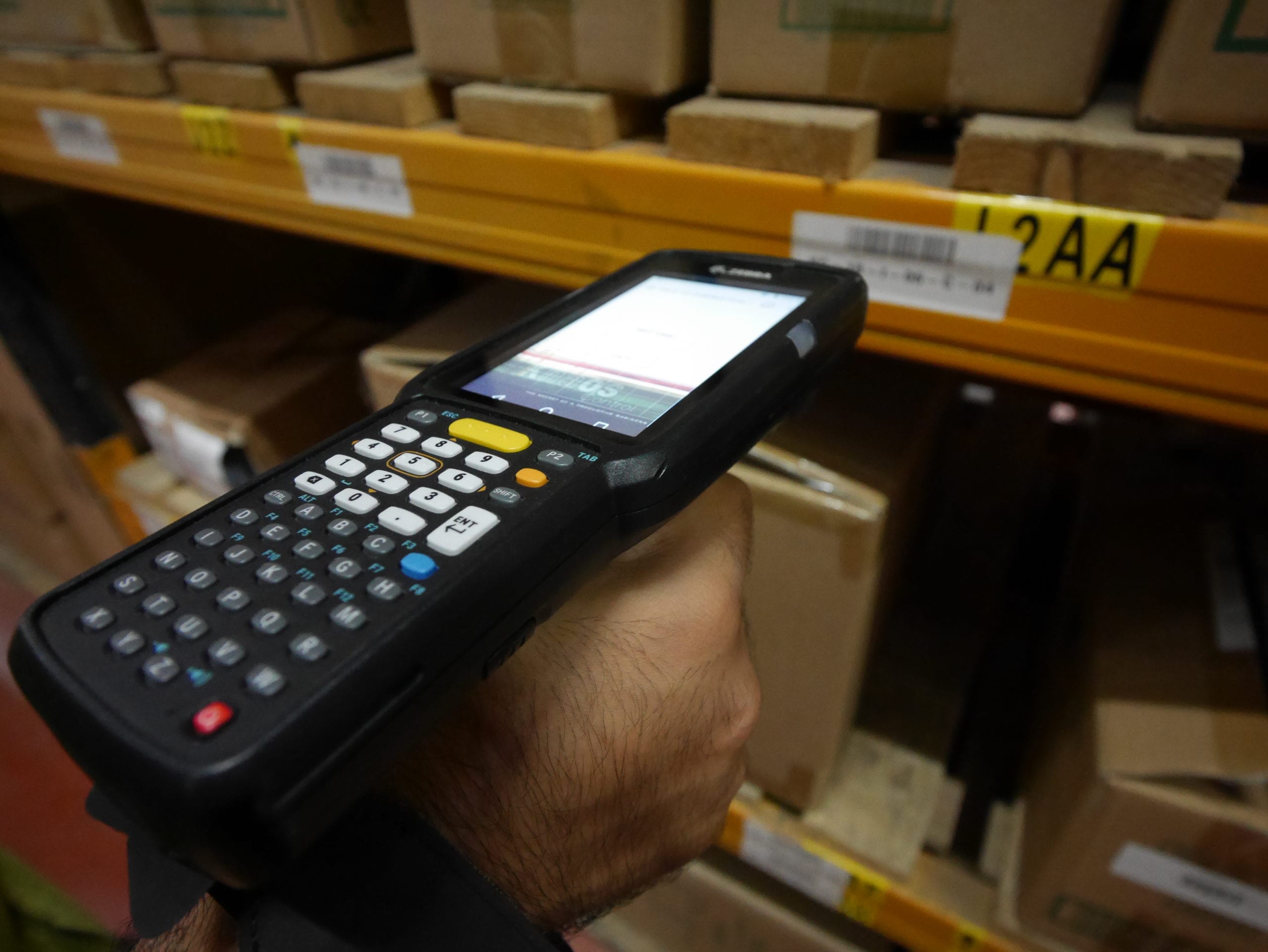




We integrate with a number of different systems.
Get in touch to find out how we can help.